
Creating a trust can be an important part of an estate plan, but the signing requirements are not always obvious. One common question is: does a trust need to be notarized in California? In many cases, California law does not require the trust agreement itself to be notarized simply for the trust to exist or be valid. However, notarization can still play an important role when dealing with certifications of trust, real estate transfers, financial institutions, and other documents connected to the trust.
Understanding the difference between signing a trust and notarizing related estate-planning documents can help you prepare more effectively. Below, we explain the general California requirements, when notarization may be necessary, and why working with an experienced mobile notary can make the process more convenient.
Does a Trust Need to Be Notarized in California?
So, does a trust need to be notarized in California? Generally, the answer is no: California’s trust statutes do not impose a blanket requirement that the underlying trust agreement itself be notarized in order for a trust to be created.
California Probate Code Section 15200 identifies several ways a trust may be created, including a declaration by a property owner that the owner holds property as trustee or a transfer of property to another person as trustee. The statute does not state that notarization is universally required for the trust instrument itself.
That said, the specific documents used to fund, certify, or administer a trust may have separate notarization requirements. This distinction is especially important when real estate is involved.
What Makes a Trust Valid in California?
A trust generally involves a person establishing an arrangement under which property is held and managed by a trustee for the benefit of one or more beneficiaries. The precise requirements depend on the type of trust, the property involved, and how the trust is created.
For example, California law specifically addresses trusts involving real property. Probate Code Section 15206 provides that a trust relating to real property generally must be evidenced by a written instrument signed by the trustee, a written instrument conveying the property signed by the settlor, or by operation of law.
This is another important reason why the question of does a trust need to be notarized in California should not be confused with the separate issue of whether a particular trust-related transaction requires notarization. The trust agreement, a certification of trust, and a deed transferring property into the trust are different documents with different purposes.
Why Are California Trusts Often Notarized Anyway?
Even when notarization is not strictly required for the trust document itself, estate-planning attorneys may still prepare documents that include acknowledgment sections or recommend having certain signatures notarized.
Notarization can help establish that the person signing a document personally appeared before a notary and acknowledged executing it. In California, an acknowledgment verifies the identity of the signer rather than confirming that the document’s contents are true or legally valid.
Depending on the estate plan, notarization may be useful for:
- Confirming the identity of the person signing a trust-related document
- Completing a Certification of Trust
- Preparing documents that will be presented to banks or other institutions
- Transferring real property into a trust
- Recording documents with a county recorder
- Executing related powers of attorney or property documents
- Reducing administrative complications when trust documents are later used
The requirements can vary by document, so it is important to follow the instructions provided by your estate-planning attorney or the institution requesting the paperwork.
Does a Certification of Trust Need to Be Notarized in California?
A Certification of Trust is different from the full trust agreement and is one area where an acknowledgment becomes particularly important.
California Probate Code Section 18100.5 allows a trustee to provide a Certification of Trust instead of handing over the entire trust instrument when establishing the existence or certain terms of a trust. The certification may identify the trust, the settlor, the acting trustees, the trustee’s powers, whether the trust is revocable, how title should be held, and other relevant information.
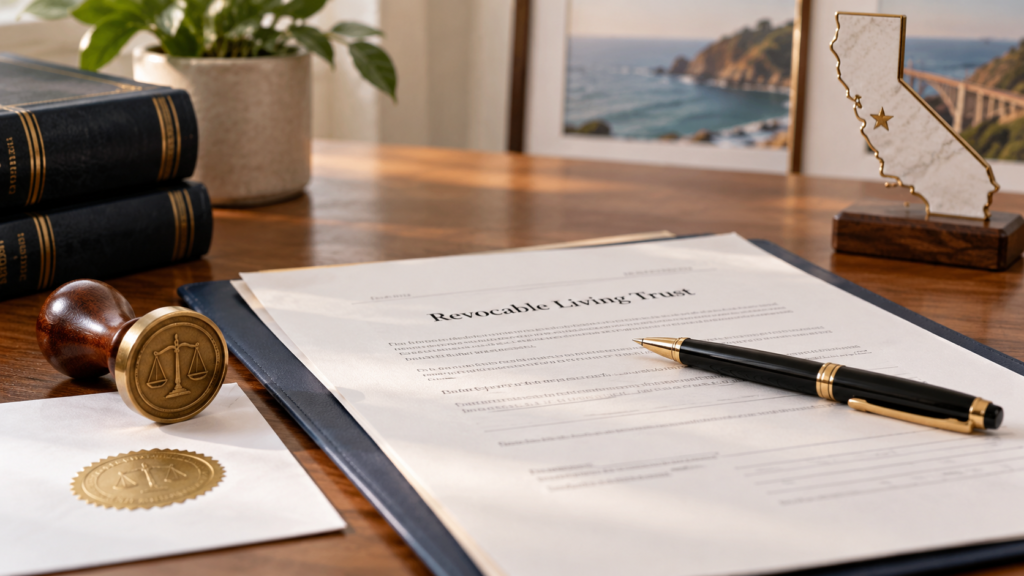
California law states that the Certification of Trust must be in the form of an acknowledged declaration signed by all currently acting trustees. An acknowledgment is a standard notarial act, which means a California Certification of Trust commonly requires notarization of the trustees’ signatures.
A Certification of Trust can be particularly useful when dealing with:
- Banks and credit unions
- Investment companies
- Escrow and title companies
- Real estate transactions
- Insurance companies
- Other organizations that need proof of a trustee’s authority
Using the certification can also help keep certain private provisions of the complete trust agreement from being disclosed unnecessarily.
Trust Notarization and California Real Estate
Real property is one of the most important situations to understand when discussing does a trust need to be notarized in California.
Putting a home or other real estate into a living trust commonly involves preparing a deed that transfers ownership from the individual property owner to the trustee of the trust. Although the trust agreement itself may not require notarization, the deed used in the transfer generally must satisfy recording requirements.
California Government Code Section 27287 provides that, subject to limited exceptions, an instrument must have its execution acknowledged before it can be recorded.
For example, an estate plan might involve a sequence such as:
- Creating and signing a revocable living trust.
- Preparing a grant deed transferring a residence into the trust.
- Having the grantor’s signature on the deed properly acknowledged.
- Recording the deed with the appropriate county recorder.
The notarization requirement in this situation applies to the recordable property document rather than necessarily to the entire trust instrument.
What Does a Notary Verify When Notarizing Trust Documents?
A California notary has a limited but important role. A notary is not responsible for deciding whether your trust is properly drafted, whether it accomplishes your estate-planning goals, or whether its provisions are legally appropriate.
For an acknowledgment, the notary verifies the identity of the person appearing and confirms that the individual acknowledged signing the document. California’s required acknowledgment language specifically explains that the notary verifies only the signer’s identity and not the truthfulness, accuracy, or validity of the document.
This distinction means that you should generally have legal questions about your trust answered before your notary appointment.

What Should You Bring to a Trust Notarization Appointment?
Preparing ahead of time can make a mobile notary appointment more efficient. Your exact requirements may vary depending on the document, but you will generally want to have the complete documents provided by your attorney or other authorized professional ready for the appointment.
You may also need:
- Valid identification that satisfies California notary requirements
- All pages of the document, even if only one page requires a signature
- Any instructions provided by your attorney, escrow officer, or financial institution
- All individuals whose signatures must be notarized
- Supporting trust documents if required for the transaction
California currently requires personal appearance before a notary for traditional California notarial acts, including acknowledgments and jurats. The California Secretary of State explains that a video appearance alone does not currently satisfy the state’s personal-appearance requirement for a California notary.
It is also generally best not to complete a signature in advance when your instructions specifically require signing in the notary’s presence. Follow the requirements for the particular notarial act being requested.
Which Trust-Related Documents May Require Notarization?
An estate plan can include many documents beyond the trust agreement. Depending on your circumstances, a notary appointment could involve one or more of the following:
Certification of Trust
As discussed above, California law requires a Certification of Trust under Probate Code Section 18100.5 to be an acknowledged declaration signed by the currently acting trustees.
Grant Deeds and Other Real Estate Documents
A deed transferring California real estate into or out of a trust will generally need an acknowledgment before it can be recorded with the county recorder.
Powers of Attorney
Estate plans frequently include powers of attorney alongside trusts. These documents have their own execution requirements, and notarization may be used depending on the particular document and circumstances.
Affidavits or Declarations
Trust administration may require affidavits, sworn statements, or declarations. Some may require a jurat, acknowledgment, or another form of notarization depending on how the document was prepared.
Trustee Documents
Successor trustees sometimes need to present documents showing that they have authority to act. California courts note that successor trustees may use a Certification of Trust to demonstrate their authority to financial institutions or other third parties.
Does Notarizing a Trust Make It Legally Valid?
Not by itself.
A notary does not determine whether a trust satisfies every legal requirement. Notarization authenticates a particular signature or performs another authorized notarial act, but it does not substitute for proper estate planning or legal drafting.
California’s acknowledgment certificate itself emphasizes this limitation by stating that the notarial officer verifies the identity of the signer rather than the truthfulness, accuracy, or validity of the underlying document.
If you are creating, revising, funding, or administering a trust, an estate-planning attorney can advise you about the substance of the documents. Once the correct documents have been prepared and you know which signatures require notarization, a mobile notary can help complete the notarial portion of the process.
Do You Need a Notary When Amending a Trust?
The answer depends on the trust agreement and the type of amendment being made.
A revocable living trust generally includes instructions describing how it may be amended or revoked. Those instructions should be followed carefully. An amendment may also involve supporting documents that call for notarization or an acknowledgment.
If an amendment affects ownership of real estate, additional deeds or recordable documents may also be required. Because the requirements depend heavily on the language of the trust and the nature of the change, it is best to have an attorney determine which documents should be prepared and whether notarization is appropriate.
Notarization Does Not Automatically Fund a Trust
Another common misunderstanding is assuming that signing or notarizing a trust automatically places all of your property into it.
Creating the trust and funding the trust are separate steps. Depending on the property involved, funding might require changing account ownership, updating beneficiary arrangements, executing assignments, or recording a deed transferring real estate into the name of the trustee.
This is particularly important for real property. California law recognizes specific written requirements for trusts involving real estate, while recordable property instruments are subject to separate acknowledgment requirements.
Your estate-planning attorney, financial institution, title company, or other appropriate professional can tell you which transfer documents are needed for particular assets.
Mobile Trust Notarization From VIP Notary Services in Santa Monica
VIP Notary Services is a California certified traveling mobile Notary Public serving Santa Monica, West Los Angeles, Beverly Hills, Century City, and surrounding communities. We are licensed and bonded in California and provide mobile service by appointment 24 hours a day, seven days a week, bringing professional notarization directly to homes, offices, businesses, and other convenient locations.
We assist with a wide range of documents, including acknowledgments, jurats and affidavits, oaths and affirmations, real estate documents, escrow and loan documents, and other legal paperwork requiring notarization. We also provide apostille services for documents that need authentication for international use.
Whether you need signatures notarized on a Certification of Trust, real estate documents connected to your trust, or other estate-planning paperwork prepared by your attorney, our mobile notary service is designed to make the process straightforward and convenient.

Contact VIP Notary Services for Convenient Trust Document Notarization
So, does a trust need to be notarized in California? The trust agreement itself is not subject to a universal notarization requirement simply because it is a trust. However, important documents associated with the trust—including Certifications of Trust and many deeds used to transfer real property—may require an acknowledgment or other notarization.
Because every estate plan is different, consult an estate-planning attorney regarding which documents you need and how they should be executed. Once your documents are ready for notarization, contact VIP Notary Services for a free quote or to schedule a convenient mobile notary appointment in Santa Monica or the surrounding Los Angeles area. Our 24/7 mobile service brings an experienced California notary directly to you when and where you need assistance.
This article is intended for general informational purposes and is not legal advice. Questions about the creation, validity, amendment, funding, or administration of a trust should be directed to a qualified California estate-planning attorney.
FAQs
Notarization can help verify the identity of the signer and may make it easier to use certain trust-related documents with banks, title companies, and other institutions. Some estate-planning attorneys also recommend notarization as an added layer of formality.
A revocable living trust generally does not have a blanket notarization requirement under California law. Still, documents used to fund or administer the living trust may need to be notarized depending on the transaction.
Common examples can include Certifications of Trust, property deeds, affidavits, declarations, and certain trustee documents. The exact requirements depend on the document and how it will be used.
VIP Notary Services provides mobile notarization for a wide range of legal and estate-planning documents throughout Santa Monica and surrounding areas. We offer 24/7 mobile service and can travel to a convenient location to complete eligible notarizations.