
Key Takeaways
- A notarized affidavit is a written sworn statement signed in front of a notary public who verifies identity, administers an oath or affirmation, and applies an official seal—making it a legally recognized document for courts, government agencies, and businesses across California and the United States.
- While many situations require a notarized affidavit, certain federal and state matters permit an unsworn declaration “under penalty of perjury” (such as those authorized by 28 U.S.C. § 1746) to legally substitute for notarized affidavits in specific proceedings—but that’s not the whole story.
- A valid notarized affidavit must include accurate personal information, a clear factual statement based on your personal knowledge, an oath or affirmation, your signature, and the notary’s certificate, seal, and date.
- VIP Notary Services is a California-commissioned mobile notary based in Santa Monica providing 24/7 on-site affidavit notarization anywhere in West Los Angeles, Beverly Hills, and nearby neighborhoods—making the process easy, accurate, and fast.
- To schedule same-day mobile notarization of your affidavit in Los Angeles, call VIP Notary Services at 310-880-7896.
What Is a Notarized Affidavit?
A notarized affidavit is a written statement of facts sworn or affirmed to be true, signed by you (called the “affiant”) in front of a notary public. The notary then completes a notarial certificate and applies an official seal, transforming a simple written declaration into a legally significant document that carries real weight.
Understanding the terminology helps clarify what can feel like an overwhelming process:
| Term | Definition |
|---|---|
| Affidavit | A formal written statement of facts, made under oath or affirmation |
| Affiant | The person signing and swearing to the truth of the affidavit |
| Notary Public | A state-commissioned authorized official who witnesses signatures, verifies identity, and administers oaths |
An affidavit differs from a simple letter or written statement because it carries legal weight that can protect you or help prove your case. When you sign an affidavit, you’re making statements under oath, meaning false statements can result in perjury charges. However, notarization itself doesn’t guarantee that the contents are true. Instead, the notary’s role is to verify your identity, confirm you’re signing willingly, and witness your acknowledgment that you understand you’re making a sworn statement.
In California and most states, notarized affidavits serve critical functions in court cases, real estate transactions, financial matters, and immigration proceedings. This makes them particularly relevant for clients throughout Los Angeles who need reliable document authentication they can trust.
VIP Notary Services handles both acknowledgments and jurats—the two main notarial acts used for affidavits and sworn statements. A jurat requires you to take an oath or affirmation before the notary, while an acknowledgment simply confirms your identity and voluntary signature.
Role of a Notary Public
A notary public is an essential part of the affidavit notarization process, serving as your impartial, state-authorized official whose primary responsibility is to verify that you are who you claim to be. When you need an affidavit notarized, the notary public ensures that you’re signing the affidavit willingly and without any form of pressure or coercion. The notary public administers an oath or affirmation, making your written statement a sworn statement based on your personal knowledge.
By witnessing your signature and applying their official seal, the notary public certifies that the document was signed in their presence and that all legal requirements for notarization have been met. This process helps prevent fraud and identity theft, providing a secure and reliable way to authenticate important documents that matter to you. In most cases, a notary public is required to notarize an affidavit, and a small fee is typically charged for this service. The notary’s involvement gives your affidavit legal standing, making it acceptable for use in courts, government agencies, and other official institutions.
When Do You Need a Notarized Affidavit?
Whether an affidavit must be notarized depends on the legal purpose, the agency or court requesting it, and the governing law. Before preparing any document, it’s crucial to confirm requirements with the requesting party or consult an attorney to ensure you’re on the right track—one small mistake could lead to costly delays.
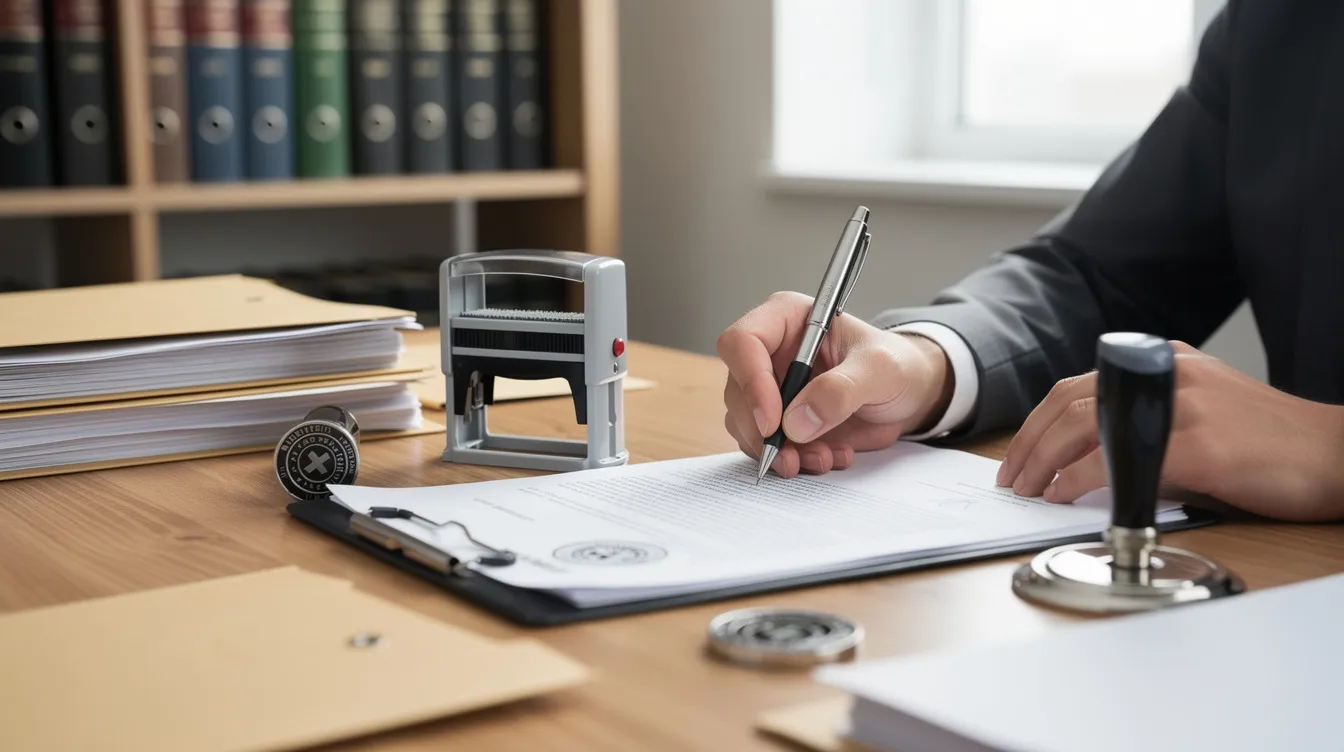
Common scenarios that almost always require a notarized affidavit include:
Court and Legal Proceedings
- Declarations submitted in civil lawsuits and family law matters
- Evidence submissions requiring sworn testimony
- Witness statements for litigation
- Support documents in probate court
Probate and Estate Matters
- Affidavit of heirship to establish inheritance rights
- Small estate affidavits used to transfer assets without full probate
- Executor authority affidavits
- Documents related to a will’s authenticity
Real Estate and Escrow Transactions
- Owner’s affidavit confirming property details
- Affidavit of title for closings
- Escrow instructions requiring sworn verification
- Affidavits for title companies during purchases and refinances
Government and Administrative Uses
Many government forms specify “notarized affidavit” as a requirement, and getting this wrong can be frustrating:
- DMV matters requiring identity verification
- Name or date-of-birth corrections on vital records
- School residency affidavits for enrollment
- Certain benefit applications at the state or county level
Immigration-Related Documents
U.S. immigration authorities frequently expect notarization even when not explicitly required by statute—and the stakes are often high:
- Affidavits of support demonstrating financial capability
- Relationship affidavits for marriage-based petitions
- Identity affidavits confirming personal information
- Character reference affidavits
Business and Financial Contexts
Banks, title companies, and lenders commonly require notarized affidavits for situations that can feel overwhelming:
- Lost document affidavits (promissory note, stock certificate, vehicle title)
- Identity verification for financial transactions
- Authority affidavits confirming a person’s right to sign on behalf of a business entity
- Loan and escrow transaction documents
VIP Notary Services has extensive experience handling loan signings and escrow packages throughout Los Angeles, making us well-equipped for these time-sensitive financial matters that can’t afford to go wrong.
Legal Background: Notarized Affidavits vs. Unsworn Declarations
Although affidavits traditionally require notarization, modern federal and many state laws permit a signed declaration “under penalty of perjury” to substitute for a sworn affidavit in specific situations—but understanding when this works can be confusing. These laws establish clear rules authorizing the use of unsworn declarations instead of notarized affidavits, such as 28 U.S.C. § 1746 at the federal level and Florida Statutes for state matters. Statutory provisions like these are deemed sufficient to satisfy the requirement for a sworn affidavit in many cases. These statutes specifically mention that declarations under penalty of perjury are acceptable alternatives to notarized affidavits, providing a practical and legally valid option in various legal proceedings.
Federal Law: 28 U.S.C. § 1746
Under this federal statute, wherever a law requires a sworn statement or affidavit, the requirement can often be satisfied by an unsworn declaration. The declaration must:
- Be dated and signed by you
- Include specific statutory language declaring truth under penalty of perjury
- Follow the precise form required for declarations executed inside or outside the United States
For declarations executed within the U.S., the following statement must appear: “I declare under penalty of perjury that the foregoing is true and correct.”
State Law Example: Florida
Florida Stat. § 92.525 authorizes written declarations under penalties of perjury in place of notarized affidavits for many state proceedings. Other states, including California through Code of Civil Procedure § 2015.5, have similar provisions allowing unsworn declarations in state and local court matters.
Important Limitations
Not every document can be replaced with an unsworn declaration—and getting this wrong can be costly. The following typically still require notarization:
- Self-proving wills and certain estate instruments
- Real estate documents that must be recorded with county offices
- Documents requiring formal acknowledgment for institution acceptance
- Instruments where statutes specifically mandate notarial certification
If you submit an incomplete or unverified document, you may face procedural delays, rejection, or other legal consequences that can derail your plans. Before relying on an unsworn declaration instead of a notarized affidavit, confirm acceptance with the relevant court, agency, or a lawyer. Acceptance varies between jurisdictions and document types, and submitting the wrong form can result in immediate rejection and costly delays that nobody wants to deal with.
Core Elements of a Valid Notarized Affidavit
A properly prepared notarized affidavit follows a specific structure that might seem overwhelming at first. Use this checklist to ensure your document meets California standards and general U.S. requirements—getting these details right can save you time and frustration.
1. Affiant’s Personal Information
Near the top of the document, include:
- Your full legal name exactly as it appears on identification
- Your current address
- Date of birth or other identifying details (when required by the requesting party)
2. Clear Factual Statement
The body of your affidavit should contain numbered paragraphs presenting facts stated based on what you know firsthand. For example:
“1. On June 15, 2025, I signed the lease for the property located at 1234 Ocean Ave, Santa Monica, California.”
“2. I have personal knowledge of the facts set forth in this affidavit.”
Avoid speculation, hearsay, or statements about matters you cannot personally verify. If belief rather than knowledge is involved, this must be clearly stated to protect you legally.
3. Oath or Affirmation Clause
Your affidavit must include express language indicating you’re swearing or affirming that the contents are true. Common language includes:
“I swear (or affirm) under penalty of perjury under the laws of the State of California that the foregoing is true and correct.”
4. Affiant’s Signature and Date
Your signature must be:
- Handwritten or a legally acceptable electronic signature
- Placed immediately under the body of the affidavit
- Dated on the same day as notarization
- Executed only in the notary’s presence when the document requires a jurat
5. Notary’s Certificate and Seal
The notarial section must include:
| Required Element | Description |
|---|---|
| Certificate Wording | Jurat or acknowledgment language as required by California law |
| Notary’s Signature | Original signature of the commissioned notary |
| Official Seal | Notary’s official stamp with name, commission number, and “Notary Public” designation |
| Commission Information | Commission number and expiration date |
| Date | Date the notarization was performed |
In California, the jurat certificate must specify that you personally appeared, took an oath or affirmation, and signed in the notary’s presence.
Willingness Confirmation and Identity Verification
A critical part of the notarization process is the notary public’s duty to confirm that you’re signing the affidavit voluntarily—this protects you and ensures the document’s integrity. Before notarizing your document, the notary public will ask if you’re signing of your own free will and ensure there’s no evidence of pressure or coercion. This step protects the integrity of your affidavit and your rights as the person signing.
Equally important is identity verification that gives you confidence in the process. The notary public will request a valid, government-issued photo ID—such as a driver’s license or passport—to confirm that you are indeed who you claim to be. This verification process is essential for preventing identity fraud and ensuring that your affidavit is legally valid. The notary public will also make sure you understand the contents of the document and are aware of the significance of making a sworn statement. Only after these steps are completed will the notary allow you to sign the affidavit and proceed with notarization.
Creating an Official Record
When a notary public notarizes your affidavit, they create an official record that serves as a vital piece of evidence in court cases and other legal proceedings that matter to you. This record includes the notary public’s signature, official seal, and the date of notarization, as well as your signature on the affidavit. The notary also records a statement confirming that you personally appeared before them and signed the document voluntarily.
This official record is kept on file by the notary public and can be referenced if the authenticity of your affidavit is ever questioned in court or by other parties. The presence of the notary’s seal and certificate on the document provides assurance that your affidavit was executed properly, making it a trusted and verifiable piece of evidence in legal matters that can give you peace of mind.
Limitations of a Notary
While a notary public is a key player in the notarization process, their authority has important limitations that you should understand. Notaries are not permitted to provide legal advice, draft legal documents, or alter the contents of your affidavit. Their role is strictly to verify your identity, witness your signature, administer the oath or affirmation, and complete the notarial certificate.
If you have questions about what should be included in your affidavit or need help with legal language, it’s important to consult an attorney or legal professional—this can save you from costly mistakes. The notary public cannot advise you on the truth or accuracy of the statements in your affidavit—they are only authorized to confirm your identity and your willingness to sign the document. For any legal advice or questions about the substance of your affidavit, always seek guidance from a qualified attorney who can help protect your interests.
How to Get a Notarized Affidavit in California (and Los Angeles)
Getting an affidavit notarized in California follows a straightforward process that doesn’t have to feel overwhelming:
Step 1: Prepare the Affidavit
Complete all text in the document before meeting with the notary. Review for accuracy, ensuring all facts are correct and the language meets the requirements of the requesting party—getting this right the first time saves hassle later.
Step 2: Do Not Sign Until You Meet the Notary
This is absolutely critical and a common mistake that can derail your plans. For a valid jurat, your signature must occur in the notary’s presence. Signing beforehand will invalidate the notarization, requiring you to start over with a new document.
Step 3: Bring Valid Identification
California law requires the notary to verify your identity using acceptable government-issued photo ID:
- California driver’s license or state ID card
- U.S. passport (current or issued within past 5 years)
- Valid foreign passport
- Military identification with photo and signature
The ID must be current or within the legally permitted time frame.
Step 4: Take the Oath or Affirmation
The notary will administer a brief verbal ceremony that’s more straightforward than you might expect. For a jurat, this involves:
- Raising your right hand (optional but traditional)
- Responding affirmatively when asked if you swear or affirm the truth of the document’s contents
- Signing the document while the notary observes
Step 5: Receive Your Notarized Document
The notary completes the certificate, applies their official seal, and returns the document to you. Keep the original in a safe place, as many agencies require original notarized affidavits rather than copies—losing this can mean starting the whole process over.
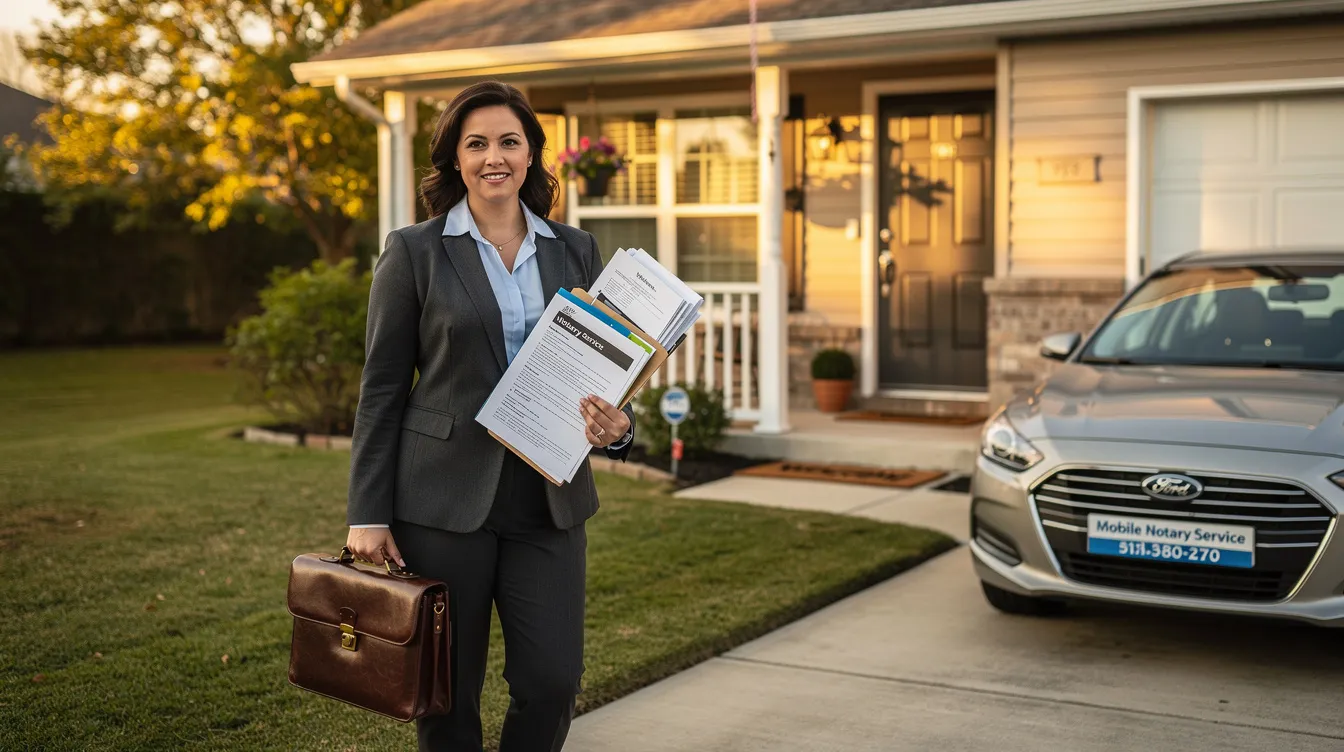
VIP Notary Services provides mobile notarization of affidavits across Santa Monica, West Los Angeles, Brentwood, Beverly Hills, and surrounding areas—24/7 by appointment. We meet you at homes, offices, hospitals, or any convenient location that works for your schedule.
To schedule same-day mobile notarization of your affidavit in Los Angeles, call VIP Notary Services at 310-880-7896.
Common Types of Notarized Affidavits We Handle
VIP Notary Services regularly assists clients with a wide range of affidavits throughout the Los Angeles area. Here are the most common types we encounter that can feel complex but don’t have to be:
Real Estate and Escrow Affidavits
- Owner’s affidavit confirming ownership and property details
- Affidavit of occupancy for lender requirements
- Affidavit of identity for loan documents
- Title company affidavits during purchases and refinances
Personal and Family-Related Affidavits
- Affidavit of residence for school enrollment
- Affidavits for government benefit applications
- Name, date of birth, or marriage record correction affidavits
- Relationship affidavits for immigration petitions
Financial and Business Affidavits
- Small estate affidavits to transfer assets without full probate
- Lost promissory note or stock certificate affidavits
- Authority affidavits confirming an individual’s right to sign for a business entity
- Payment or debt-related affidavits for financial institutions
International Document Processing
VIP Notary Services also notarizes specialized affidavits for apostille processing when your documents will be used abroad. We coordinate notarization with same-day or rush apostille services whenever possible, helping you meet tight international deadlines that can feel overwhelming.
Estate Planning and Probate
Affidavits are especially important in estate planning and probate matters, where they help verify the authenticity of a will or other estate documents—areas where accuracy is absolutely crucial. For example, in Florida, an affidavit can be used to self-prove a will, allowing it to be admitted to probate without the need for additional testimony or evidence. This affidavit must be signed by the person making the will, as well as by two witnesses, and must state that the person appeared before the witnesses and signed the will voluntarily and with full knowledge of its contents.
Using an affidavit in estate planning and probate provides clear evidence that the person signing the will did so willingly and understood what they were signing. This can help prevent disputes among heirs and ensure that the person’s wishes are honored—giving families peace of mind during difficult times. Whether you are in California, Florida, or another state, proper use of affidavits in estate matters can streamline the probate process and provide confidence that your intentions will be carried out as intended.
How Mobile Notary Services Simplify Affidavit Notarization
A traveling or mobile notary brings professional notarization services directly to you, eliminating the stress and hassle of traditional notarization. Instead of searching for a notary office, taking time off work, or dealing with parking and wait times, VIP Notary Services sends a certified California notary to your chosen location at a scheduled time that works for you.
Convenience Factors for Los Angeles Clients
- Flexible scheduling including evenings, weekends, and holidays
- Appointments at homes, workplaces, hospitals, senior centers, or even recording studios
- Shorter turnaround for urgent affidavit needs that can’t wait
- No need to coordinate transportation or deal with traffic that adds stress to your day
Ideal Situations for Mobile Notarization
Mobile service is particularly helpful for situations that can feel overwhelming:
- Multi-signer affidavits where coordinating schedules is challenging
- Real estate and escrow packages requiring multiple documents
- Clients with limited mobility or health concerns
- Busy professionals who cannot leave their workplace
- Time-sensitive filings with court or agency deadlines
Experience You Can Trust
VIP Notary Services has been a California-commissioned, bonded, and insured mobile notary since 2012. We are members of the National Notary Association and have extensive experience handling sensitive legal documents including affidavits, loan documents, and apostille-bound paperwork—giving you confidence that your documents are in expert hands.
Preparation Tips for Your Appointment
To keep your mobile notary appointment efficient and stress-free:
- Have your unsigned affidavit ready and reviewed for accuracy
- Prepare valid, current identification
- Arrange for any required witnesses to be present
- Clear a comfortable space for signing
Ready to Get Your Affidavit Notarized?
Don’t risk rejection or delays from improperly notarized documents that can derail your plans. VIP Notary Services brings expert mobile notarization to your door—any day, any time, anywhere in Santa Monica, West Los Angeles, Beverly Hills, and surrounding neighborhoods. We make the process easy, accurate, and fast so you can move forward with confidence.
Call 310-880-7896 today to schedule your mobile notary appointment.
Frequently Asked Questions About Notarized Affidavits
Not every written statement labeled an “affidavit” legally requires notarization—but this can be confusing. However, most courts, government agencies, and financial institutions specifically demand a notarized affidavit for authenticity and evidentiary purposes.
In some federal court proceedings and state matters, an unsworn declaration under penalty of perjury can replace a notarized affidavit. Acceptance depends on the governing law and the receiving entity’s rules—but getting this wrong can cause delays.
Always follow the exact instructions on the form or notice you received. When in doubt, ask the requesting court, agency, or an attorney whether notarization is required—this simple step can save you time and frustration.
A properly executed notarized affidavit from California is generally recognized in other states, provided it complies with California notary law at the time of execution—but there can be complexities.
For use in another country, your affidavit may need an apostille or consular legalization. Countries that are parties to the Hague Apostille Convention accept apostilles; non-member countries may require embassy or consulate authentication that can feel overwhelming.
VIP Notary Services can notarize your affidavit in California and coordinate or advise on obtaining a California apostille for international use, making the process easier for you.
An improperly notarized affidavit—missing a notary seal, lacking required certificate wording, or signed outside the notary’s presence—will likely be rejected by courts, agencies, or title companies, which can be incredibly frustrating.
Rejection causes delays, additional costs, and the need to re-execute the affidavit. In time-sensitive matters like court deadlines or real estate closings, this can have serious consequences that nobody wants to deal with.
Using an experienced, California-commissioned mobile notary like VIP Notary Services reduces error risk and ensures compliance with state notary laws—giving you peace of mind.
Notaries are not permitted to provide legal advice, draft legal content, or decide what should be included in your affidavit. Doing so would constitute the unauthorized practice of law—and this is important for your protection.
The notary’s role is strictly limited to:
- Verifying your identity
- Witnessing your signature
- Administering an oath or affirmation
- Completing the notarial certificate
If you need help drafting or revising your affidavit’s substance, consult an attorney, legal clinic, or the agency that provided the form before scheduling notarization—this can save you from costly mistakes.
Notarization itself doesn’t impose an automatic expiration date on your affidavit. The document’s usefulness depends on its specific purpose and the requesting party’s rules—but this can be confusing.
Some agencies accept affidavits that are several months old. Others—particularly certain courts, lenders, and title companies—require the affidavit to be signed and notarized within a specific timeframe, such as 30 or 60 days before submission.
Check any instructions or filing deadlines you have received. If a fresh affidavit is needed, VIP Notary Services can accommodate same-day or urgent appointments throughout Los Angeles to keep you on track.